
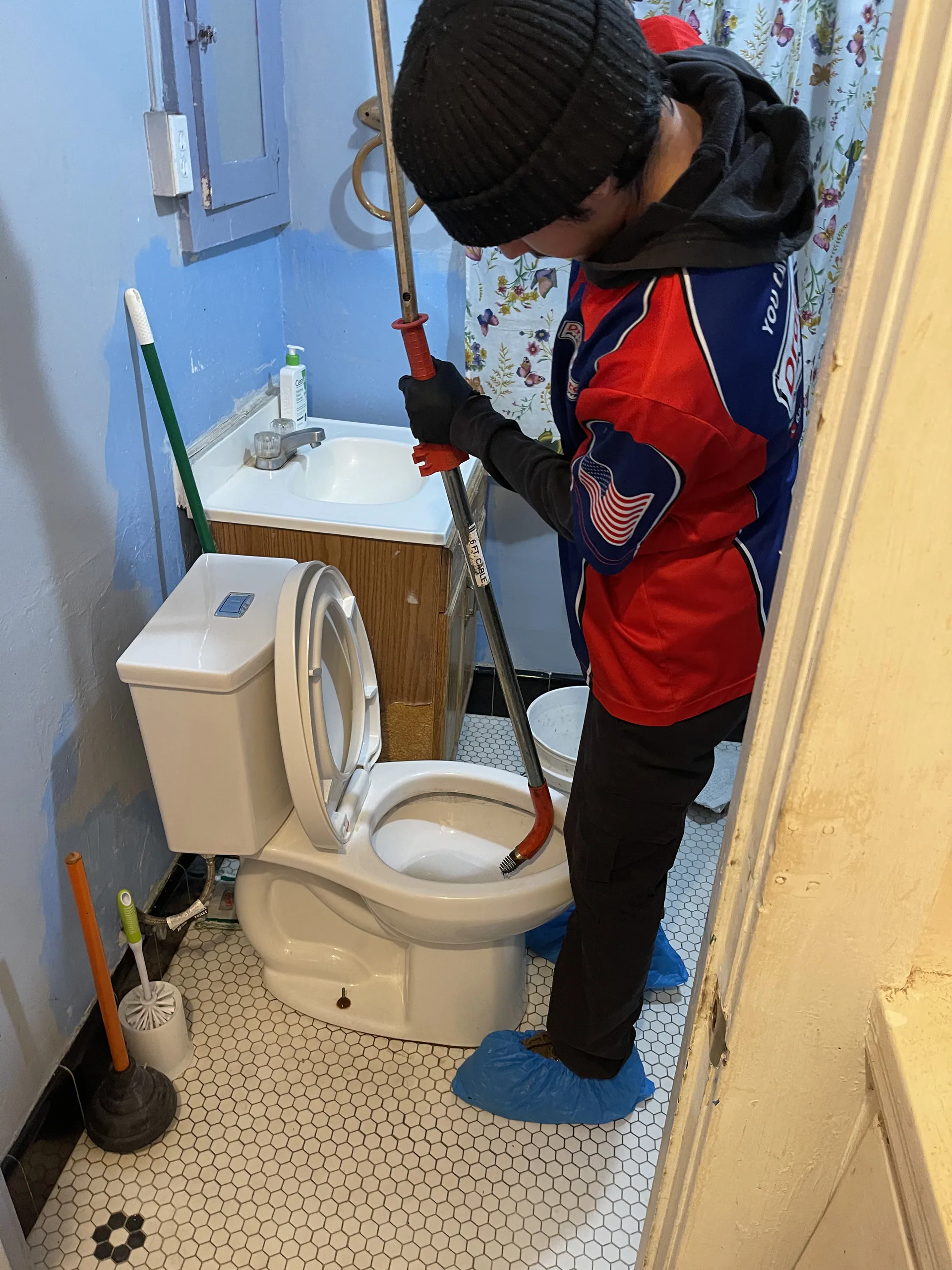
Older California homes have a certain magic until the shower turns into a weak trickle, the pipes rattle in the wall, or the hot water takes forever to show up. These common plumbing problems tend to start small, but the catch is they rarely stay that way for long in homes with aging pipes, hard water, shifting soil, and decades of wear hiding behind the walls.
1. Low water pressure that makes everything take longer
Low water pressure is one of those problems that turns every ordinary task into a chore. Showering takes longer, rinsing dishes gets annoying, and filling a pot at the sink suddenly feels like waiting for paint to dry. In older California homes, weak flow often traces back to mineral buildup, corroded supply lines, a partly closed valve, or a leak somewhere you cannot see.
The first clue is scope. If one bathroom sink runs weak but everything else feels normal, the issue is often close to that fixture. If the kitchen sink, shower, and hose bib all seem sluggish, the problem is likely farther back in the plumbing system. That distinction matters because a clogged aerator is a very different fix from an old galvanized pipe that has narrowed from the inside over 50 years.
Why older california homes get this problem so often
Older homes commonly have galvanized steel water lines, and that material ages badly. Over time, the inside of the pipe collects rust and mineral scale until the opening gets smaller and smaller. Water still moves, but not the way it used to. It is a little like trying to drink a milkshake through a coffee stirrer.
Hard water makes the problem worse. Many California areas have enough dissolved minerals to leave crusty buildup on faucets, showerheads, and inside the plumbing itself. Add in neighborhood pressure swings in older service areas, and low pressure becomes a familiar complaint rather than a rare one.
What you can check before calling for help
Start simple. Unscrew the faucet aerator, which is the little screen at the tip of the spout, and see if it is packed with grit. Showerheads can clog the same way. A good cleaning sometimes restores flow immediately.
Then compare pressure at a few spots around the house. Try hot and cold water, upstairs and downstairs, inside and outside. If only one fixture is weak, the fixture is the likely culprit. If the whole house feels off, the problem is probably in the supply piping, a pressure regulator, or the main line.
2. Slow or clogged drains that keep coming back
Every older home seems to have that one drain that never quite behaves. You clear it, it improves for a week, and then you are right back to standing in two inches of shower water. Repeat clogs are not random. Usually, something deeper is going on.
Hair, soap scum, grease, food scraps, and pipe scale all collect over time. In older drain lines, the inside of the pipe is often rougher than it used to be, which gives debris more places to stick. That is why a drain can seem “mostly fine” until one extra bit of buildup tips it into slow-drain territory again.
The usual trouble spots
Bathroom sinks tend to trap hair, toothpaste sludge, and soap residue. Tubs and showers catch long strands of hair that bind into dense clumps near the drain opening or farther down the line. Kitchen drains have their own personality, and it is usually grease. Even if hot water sends it down at first, grease cools, sticks to the pipe walls, and slowly narrows the line like plaque in an artery.
Older homes also have drain pipes that may already be coated inside with years of residue. That means even normal use can trigger another clog faster than you would expect.
When a “simple clog” points to a bigger drain problem
One slow sink is annoying. Multiple slow drains at once are a warning. If you hear gurgling, notice water backing up in the tub when another fixture drains, or see wastewater rising in the lowest drain in the house, the issue may be in the main sewer line rather than in one branch drain.
That is the line between inconvenience and bigger trouble. Surface clogs sit near the fixture. Main line clogs affect the house more broadly, and they tend to keep coming back until the underlying blockage gets cleared properly.
3. Leaky faucets and fixtures that waste water quietly
A dripping faucet seems minor because it does not look dramatic. No flood, no broken pipe, no panic. But that steady drip can waste a surprising amount of water, stain sinks, and slowly drive up your bill month after month.
In older homes, the usual causes are worn washers, failing cartridges, loose fittings, and fixture parts that just do not seal the way they used to. Bathroom faucets, shower valves, and outdoor hose bibs are especially common trouble spots because they get frequent use and lots of wear.
Small drip, bigger consequences
The obvious problem is wasted water, especially in a state where water is expensive and conservation is part of daily life. But the damage does not always stop there. A leak under the bathroom sink can swell the cabinet floor. A shower valve that never fully shuts off can leave stains and mineral crust. A hose bib that drips onto an exterior wall can create its own mess over time.
And honestly, the sound alone is enough to make the problem worth fixing. That little tap-tap-tap at 2 a.m. gets old fast.
Old parts that stop sealing properly
A washer is a small rubber or plastic piece that helps seal moving parts. A cartridge is the internal valve body inside many modern-style faucets that controls water flow and temperature. When either part wears out, water slips past even when the handle is turned off.
Older fixtures often reach the point where replacing one part helps, but another aged part fails soon after. That does not always mean full replacement is necessary, but it does mean a leaky faucet is sometimes a symptom of a fixture nearing the end of its useful life.
4. Hidden pipe leaks behind walls, under floors, or in crawl spaces
Some leaks announce themselves with a puddle under the sink. Others stay hidden long enough to do real damage. In older California homes, concealed leaks behind walls, under floors, or in crawl spaces are especially frustrating because the first sign is often indirect.
You may notice a musty smell before you see any water. Paint may bubble. Floorboards may start to cup or warp. A drywall patch may feel soft when you touch it. If the water bill jumps and your habits have not changed, hidden leakage belongs high on the suspect list.
Signs your house is telling you something
A house with a concealed leak usually leaves clues. Watch for stains on walls or ceilings, mildew odor in a room that never quite smells fresh, damp cabinets under sinks, or drywall that feels softer than it should. Sometimes you can even hear faint water movement when every fixture is turned off.
Warm spots on the floor deserve attention too, especially if the house sits on a slab. That can point to a hot water line leak below the surface rather than moisture from above.
Why older pipes start leaking
Pipes do not fail for just one reason. Corrosion eats away at metal from the inside. Joints loosen or degrade with age. Pressure stress wears on weak points over time. And in California, settling and seismic movement can shift piping enough to stress connections that had been fine for years.
Older framing and finishes raise the stakes because water damage spreads quietly. What starts as a pinhole leak can end up affecting flooring, cabinetry, insulation, and drywall long before the source becomes obvious.
5. Sewer line backups caused by tree roots and aging pipes
Few plumbing problems get ugly faster than a sewer line backup. This is one of the messiest and most urgent problems in older California homes, especially where original clay or cast iron sewer lines are still in service.
A big shade tree in a front yard in Sacramento or San Jose may look perfect from the curb, but the roots below ground are always searching for moisture. Tiny cracks or loose joints in an old sewer pipe are enough to invite root growth inside. Once roots get in, waste and paper catch on them, and the line starts clogging again and again.
Why older sewer lines are vulnerable
Clay sewer pipes were widely used in older homes, and the joints are natural weak points over time. Cast iron lasts a long time but eventually corrodes and roughens inside. Both materials become more vulnerable as the soil shifts, joints separate, or offsets develop where one pipe section no longer lines up cleanly with the next.
California soil movement adds another layer to the problem. Drought, rehydration, settling, and minor seismic activity can all nudge buried sewer lines just enough to create openings or misalignment.
Red flags you should not ignore
Sewage odor inside or outside the home is a major warning sign. So are recurring toilet clogs, drains that gurgle when other fixtures run, or wastewater backing up into a shower or tub. If plunging seems to help briefly but never truly solves the issue, that points away from the toilet itself and toward a larger sewer line problem.
The lowest fixture in the house often shows trouble first. If that drain backs up, take it seriously.
6. Water heater trouble, from lukewarm showers to strange noises
Hot water problems have a way of making themselves known at the worst possible moment. You step into the shower expecting normal heat, and halfway through, it turns lukewarm. Or the tank starts making odd rumbling sounds in the garage and suddenly seems much louder than before.
Older tank-style water heaters in aging homes commonly struggle with sediment buildup, rust, failing heating elements, thermostat issues, and ignition problems. Sometimes the unit is also just undersized for how your household uses hot water now compared with decades ago.
What sediment buildup actually does
Sediment is the grit and mineral material that settles at the bottom of the tank over time. In hard water areas, that buildup can get thick enough to interfere with heating. The burner or heating elements have to work harder, efficiency drops, and hot water becomes less reliable.
That rumbling or popping sound some tanks make is often water bubbling through that layer of sediment. It is not just noise. It is a sign the system is working harder than it should and delivering less in return.
Signs it may be time to repair or replace
Age matters. An older tank that delivers rusty water, runs out of hot water too fast, or leaks around the base is telling you something. So is a sudden rise in energy use without another obvious cause.
If the problem is a thermostat, heating element, or ignition component, repair may solve it. But if the tank itself is corroding or leaking, replacement is usually the more realistic path. Once a tank starts leaking from the body, that clock is ticking.
7. Running toilets and old toilet parts that never quite behave
Older toilets are famous for developing weird little habits. The handle sticks. The tank refills for no reason. You have to jiggle the lever just right or the water keeps running. It feels minor until the water bill arrives.
A running toilet can waste a lot of water quietly because it often goes unnoticed for days or weeks. In older homes, the fix is usually tied to a few simple parts inside the tank that have aged out.
The parts that usually fail first
The flapper is the rubber seal at the bottom of the tank. When you flush, it lifts to let water rush into the bowl, then drops back down to seal the opening. If it warps or gets brittle, water keeps leaking into the bowl and the tank refills over and over.
The fill valve is the part that refills the tank after each flush. If it sticks, runs too long, or does not shut off cleanly, the toilet can keep drawing water. Chains, handles, and seals also wear out, but the flapper and fill valve are the usual troublemakers.
Quick clues that the toilet is wasting water
Listen for refill sounds when nobody has flushed recently. Watch for slight rippling in the bowl water. Try the food coloring test by adding a few drops to the tank and waiting. If color shows up in the bowl without flushing, water is slipping past the flapper.
Those small clues matter because a toilet can waste water nonstop without making a dramatic scene.
8. Corroded or outdated pipes that affect water quality
Sometimes the plumbing problem is not one leak or one clog. It is the pipe material itself. In many older California homes, outdated piping creates several different symptoms at once, such as poor pressure, discolored water, metallic taste, recurring leaks, and rust particles at the faucet.
When that happens, isolated repairs can start to feel endless because the deeper issue is still sitting in the walls.
Common older pipe materials in california homes
Galvanized steel was common for supply lines in older houses, but it tends to corrode internally and narrow over time. Cast iron was widely used for drain lines and can rust, roughen, and eventually crack or fail. Older copper supply lines generally age better, but they can still develop pinhole leaks, especially where water chemistry, abrasion, or pressure stress take a toll.
Each material has its own failure pattern, but the result is often the same: reduced performance and more frequent plumbing issues.
When water color or taste points to pipe trouble
Brown or yellow water can signal rust or sediment somewhere in the system. A metallic taste may point to aging supply piping. If discoloration appears only when using hot water, the water heater may be the source rather than the household piping. If both hot and cold water show the same problem, the issue is more likely in the supply lines or even the main service line.
That hot-versus-cold comparison is a useful shortcut. It helps narrow the search faster than guessing based on color alone.
9. Slab leaks in homes built on concrete foundations
Slab leaks deserve their own spot on the list because they are especially relevant in California. A slab leak is exactly what it sounds like: a water line leaking beneath the concrete foundation of your home.
Because the leak is hidden under the slab, the warning signs are easy to dismiss at first. A warm patch on the floor may seem odd but harmless. A slightly higher bill may not stand out right away. Meanwhile, water keeps moving where you cannot see it.
Why slab leaks show up in california homes
Many California homes are built on concrete slabs, and the plumbing runs through or under that foundation. Over time, aging copper lines can wear from contact with soil, pressure, or tiny vibrations. Abrasive soil conditions and natural movement from settling or seismic activity can add more stress.
The result is a leak in one of the least convenient places possible. Not visible, not easy to access, and not something that stays cheap if ignored.
The signs people often miss at first
Warm flooring is one of the classic clues, especially from a hot water line leak. You may also hear water running under the floor when everything in the house is off. Damp spots, musty smells, unexplained low pressure, or a bill that suddenly spikes all belong on the list.
Hairline floor cracks or moisture where it should not be can show up later. By then, the leak has usually been active for a while.
10. Water hammer and rattling pipes when fixtures shut off
If your pipes bang, thump, or rattle when a washing machine valve closes or a faucet shuts off quickly, that is not just old-house personality. It is usually water hammer, and it puts real stress on the plumbing system.
Water hammer happens when flowing water stops suddenly and sends a shock wave through the pipe. In a well-supported system, that shock gets controlled. In an older home with loose pipes, aging supports, or pressure issues, you hear it loud and clear.
What that banging sound actually means
Think of water moving through a pipe like a car rolling down a street. If it has to stop all at once, the force has to go somewhere. In plumbing, that sudden stop creates a pressure surge that can make the pipes jump or bang against framing.
That noise is the symptom. The bigger concern is the strain it places on joints, fittings, valves, and older pipe sections already dealing with age.
Why older homes hear it more
Older homes often have plumbing that has been altered over time. A remodel here, a fixture swap there, maybe a washing machine added years after the house was built. Those changes can leave the system with poor support, missing water hammer arrestors, or pressure conditions the original plumbing was never designed to handle.
As pipe straps loosen and old air chambers stop doing their job, the noise tends to get worse, not better.
11. Old shutoff valves and hose bibs that fail when you need them most
Some plumbing parts do almost nothing for years until the day you desperately need them. That is the category for shutoff valves and hose bibs.
In an older home, fixture shutoffs under sinks, the main shutoff valve, and outdoor spigots often sit untouched long enough to corrode, seize, or start leaking when turned. That becomes a real problem during an active leak, when the whole point is to stop water fast.
Emergency parts that often get ignored
A shutoff valve is simple: it stops water flow to a fixture or to the house. But old valves can freeze in place from corrosion or mineral deposits. If you try to turn one after years of neglect, it may refuse to move or start dripping around the stem.
That is why these parts matter more than people think. A perfectly good faucet repair gets a lot harder if the shutoff below the sink no longer works.
Outdoor fixtures age faster than you think
Hose bibs deal with sun, weather, dirt, and hard water deposits. In California side yards and narrow side passages, those outdoor fixtures can quietly deteriorate for years. A small drip from the spigot may come from a worn washer, but leaks around the handle often mean the packing has dried out or worn down.
If the wall behind the hose bib gets damp, the issue may be more than surface deep. Outdoor leaks can affect siding, stucco, and framing before anybody notices.
12. Main water line issues that show up as whole-house plumbing problems
When every fixture starts acting strangely at once, the problem may not be inside the house at all. Main water line trouble can mimic several separate plumbing issues, which is why it gets missed so often.
An aging service line can cause low pressure throughout the home, murky water after disturbances, hissing sounds, or soggy patches in the yard. You might start by blaming the showerhead, then the kitchen faucet, then the laundry hookup, only to realize the whole house has the same problem.
Signs the trouble is in the main line
Whole-house low pressure is one of the biggest clues. If sinks, showers, and outdoor spigots all weaken together, the main supply line deserves attention. Wet spots in the yard with no irrigation running can also point to an underground water line leak.
Sometimes the signs are subtle, like a hissing sound near the service line, or murky water that appears after nearby utility work or pressure fluctuations. When the symptoms spread across the entire house, think bigger than a single fixture.
Why this problem gets missed
It is easy to chase the symptom you can see. A weak faucet gets attention before an underground line does. But when multiple fixtures share the same weird behavior, treating each one separately can waste time and money.
The trick is to step back and look for the pattern. If the whole house changed at once, the source is often farther upstream than you first assume.
What to do first if your older home has more than one of these problems
If your home has more than one of these common plumbing problems, start with the issues that can do the most damage fastest. Active leaks, sewer smells, no hot water, and signs of a slab leak go to the top of the list. Those are not “watch it and see” problems.
After that, narrow the symptoms. Notice which fixtures are affected, when the problem started, and whether it happens all day or only at certain hours. That little bit of pattern-spotting can save a lot of guesswork. A problem at one sink points you one way. A problem across the whole house points you another.
Try one simple thing first: check whether the issue is isolated to one fixture or shows up in multiple places. That clue often points straight to the real problem, and in an older California home, getting the source right early is half the battle.
- Disclaimer: This article is for general informational purposes only. It is not professional advice, a quote, or a service agreement. Conditions at your home or property may differ; contact a qualified professional for an on-site evaluation before making repair, safety, or spending decisions.
Disclaimer: This article is for general informational purposes only. It is not professional advice, a quote, or a service agreement. Conditions at your home or property may differ; contact a qualified professional for an on-site evaluation before making repair, safety, or spending decisions.