

Remodel day is a bad time to discover that the main water shutoff will not turn. Demolition, fixture swaps, and rough plumbing all assume someone can isolate the house quickly. A valve that is frozen, leaking, buried, or simply never labeled turns a planned afternoon of work into an emergency call.
Drain Doctor Plumbing & Rooter evaluates and replaces main shutoffs across Covina, Walnut, and the San Gabriel Valley as part of ordinary plumbing repair and remodel support. This article explains what to check before demolition depends on that valve.
Put valve condition beside meter location early
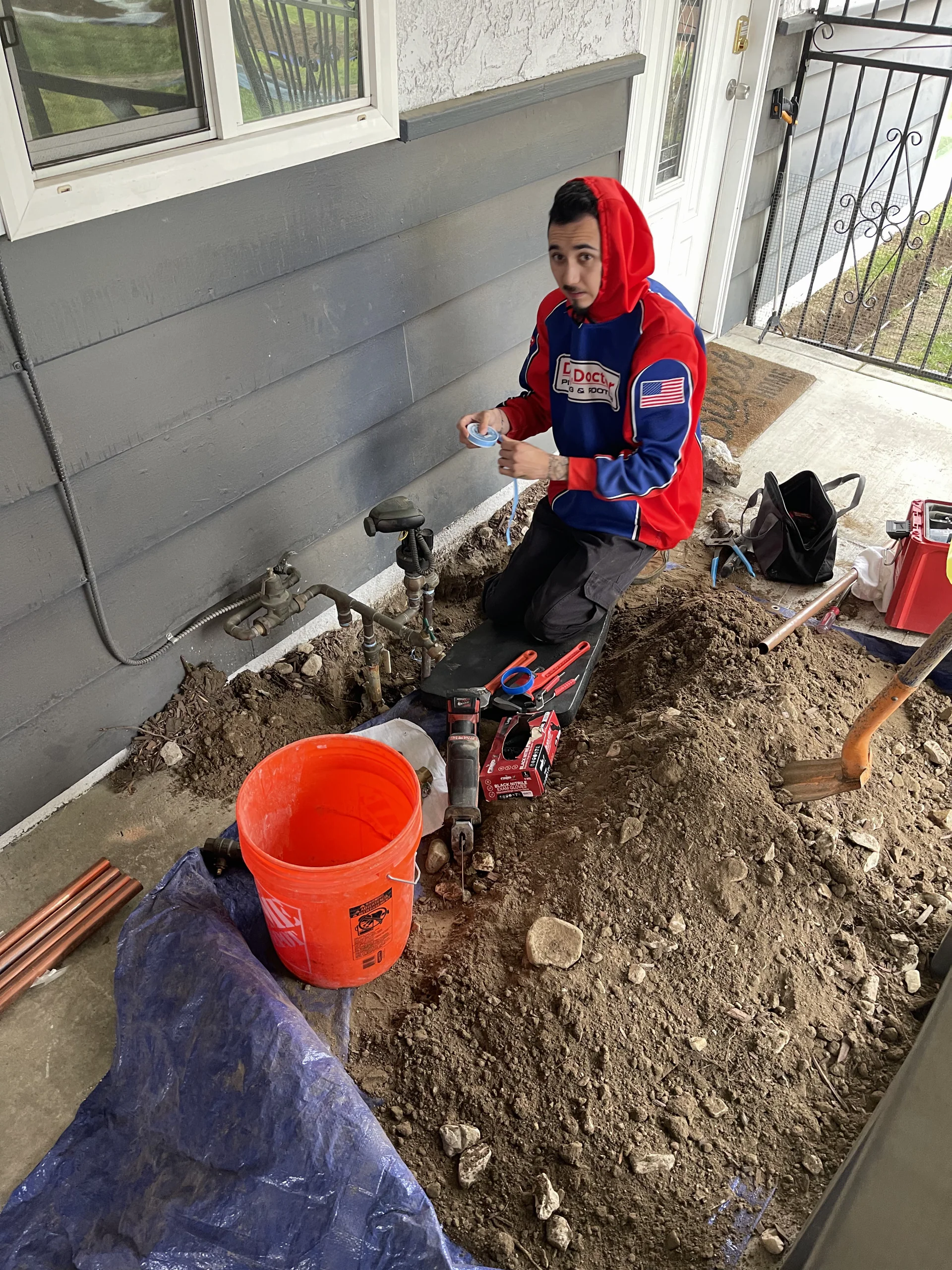
Know where the utility meter sits, where the main shutoff is, and how those points relate to the interior distribution. On some San Gabriel Valley homes the shutoff is near the meter. On others it is at the house, in a garage, or in a buried box that landscaping has nearly erased.
Operate the valve before the remodel calendar locks, not after cabinets are on the truck. A shutoff that takes two hands, leaks at the stem, or will not complete a turn needs attention while the house is still in normal use. Waiting until the plumber is mid-cut is how finished floors get water damage that was never in the remodel budget.
Photograph the valve and the meter area. Note whether anyone in the household already knows how to isolate the water. If the answer is "we have never tried," that is the finding.
Why remodels lean on whole-house isolation
Kitchen and bath projects open supply lines. Temporary caps fail. Old angle stops break when someone finally turns them after years of sitting still. A working main shutoff is the backup when a local valve does not hold.
Whole-house isolation also matters when the remodel includes a water heater swap, a manifold change, or a partial repipe. Those scopes often need the house dry for hours. A temporary water plan for the family only works if the shutoff can be opened and closed on a schedule.
If the remodel will touch many fixture connections, ask whether replacing aged stop valves at those fixtures belongs in the same phase. Local stops and the main shutoff solve different problems, and both can fail under remodel stress.
What to record before we visit
Write down where you believe the main shutoff is, whether it has ever been operated successfully, and whether it currently leaks. Note remodel rooms and the date demolition is supposed to start. Say whether temporary water will be needed for occupants or only for construction crews.
If access is behind storage, through a locked side yard, or under a deck, say that too. Access changes how long the replacement takes and whether landscaping or hardscape has to move. Labeling belongs on the closeout: the next person in the house should be able to find and operate the valve without a scavenger hunt.
Leave unknowns blank rather than guessing pipe size or valve type. We will confirm materials onsite.
How replacement fits beside other supply work
A main shutoff replacement can be a focused repair. It can also uncover related needs on the service line, pressure regulator, or first fittings into the house. Related scopes may include water-line repair or a broader look at aging distribution when a repiping conversation is already underway for the remodel.
The written estimate should separate the shutoff replacement from optional follow-up items. You should see what is required for safe isolation during the remodel and what is recommended because of condition found during the visit.
If a water heater is also changing, keep that on its own line unless the connections truly share the same opening. Browse water heater repair when that equipment is part of the same project season.
Sequence with the remodel calendar
Replace or confirm the main shutoff before demolition opens walls you cannot easily protect from a spill. Coordinate with the general contractor so the valve work does not land on the same morning as concrete, flooring, or cabinet delivery.
After replacement, operate the valve with the property owner or site lead present. Agree on who is allowed to turn it during construction. A remodel with five trades and no clear shutoff ownership is how the water gets left on overnight after a pressure test.
Closeout that stays with the house
Leave a labeled shutoff, a photo of the final installation, and a one-line note about the valve type and date. Put that with the remodel folder or property file, not only in a text thread that disappears when the project manager changes phones.
We have served the San Gabriel Valley since 1996 and dispatch from Walnut. Call (626) 332-9984 or contact us to evaluate a main shutoff before your remodel depends on it. Coverage details are on our service area pages, and more planning articles are on the blog.